
Fillmore County Probate Court Records
Probate records in Fillmore County are filed in District Court. The official Fillmore County District Court page states that the local court has original jurisdiction in probate cases along with civil, family, juvenile, criminal, and traffic cases. That point matters because the county does not have a stand-alone probate court, a municipal court probate counter, or a separate county court for estate files.
Minnesota probate guidance recognizes two main paths. Informal probate is an application asking the court to appoint a personal representative without a hearing before a judge, usually for less complicated situations. Formal probate is a petition asking for the appointment with a hearing before a judge, used when the matter is more complex. The Attorney General probate handbook says probate generally must be initiated within three years after death and filed in the county where the decedent lived at death.
For state court probate guidance, use the Minnesota Judicial Branch probate, wills, and estates help topic.
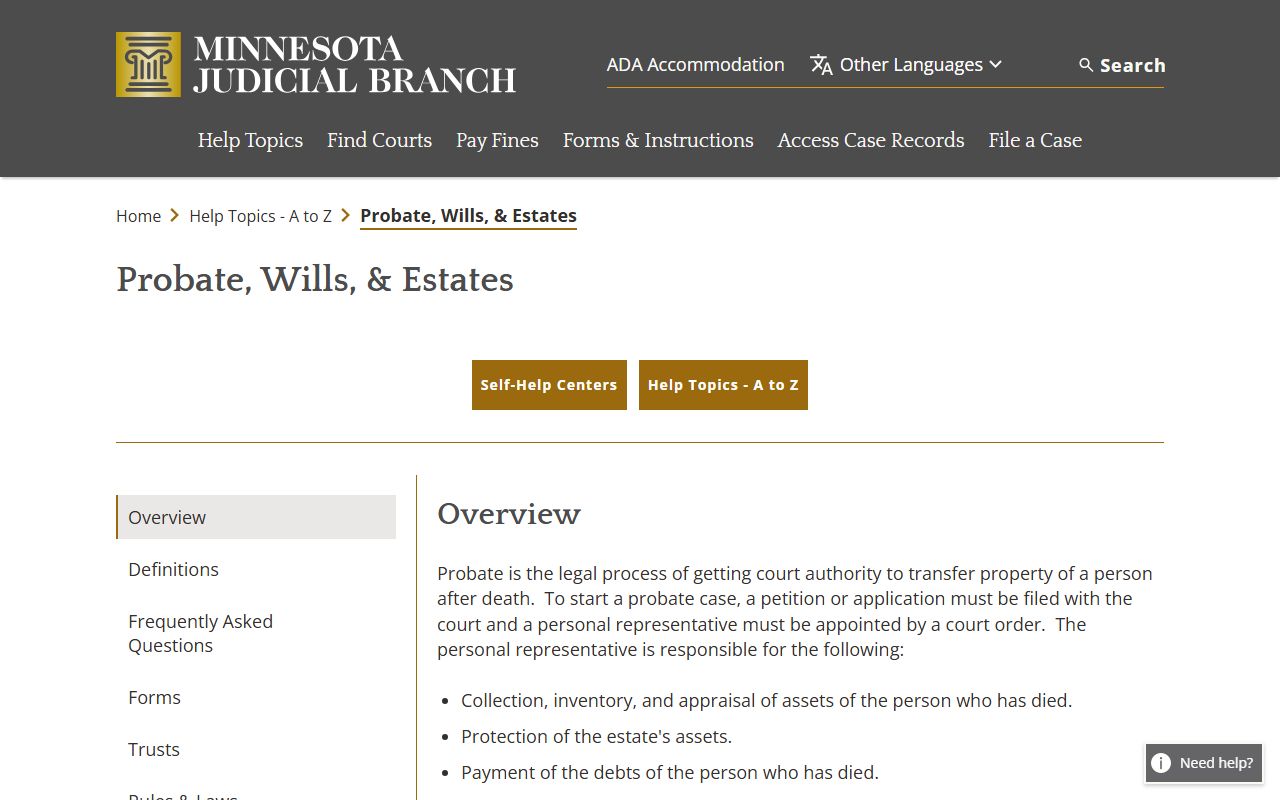
The Judicial Branch help topic supports the local Fillmore route by explaining probate concepts before a filing is made in District Court.
Fillmore County Probate Terms
Probate files use terms that point to a person's role in the estate or to the type of court action being requested. The definitions below are framed for Fillmore County District Court records and Minnesota probate forms.
- Decedent
- The person who died and whose estate may need court administration.
- Personal representative
- The person appointed to collect estate assets, give notices, pay debts and taxes, and distribute property.
- Informal probate
- An application process for less complicated estates, with appointment by a probate registrar and no judge hearing.
- Formal probate
- A petition process with a hearing before a judge, used when a will, appointment, or estate issue needs more court involvement.
- Intestate
- A situation where a person died without a will.
- Guardianship
- A court case involving appointment of a guardian, often involving personal decision-making authority.
- Conservatorship
- A court case involving management of protected financial affairs or property.
Search Fillmore County Probate Records
Online probate lookup starts with MCRO Case Search. Use the Probate or Mental Health case category and the Fillmore county filter, then search by decedent or party name if known. Case-number search is stronger when a file number is already available. Probate hearing information can also appear in MCRO Hearing Search or the Fillmore daily calendar, while public online documents must be searched by case number in MCRO Document Search.
- Open MCRO Case Search and choose a name search or case-number search.
- Filter court location to Fillmore County when using a statewide search.
- Select Probate or Mental Health if using case category filters.
- Review the public register and note the case number for document lookup.
- Use MCRO Document Search by case number for public online documents.
- Contact Fillmore Court Administration for certified copies or records missing from remote access.
For probate forms, use the Minnesota Judicial Branch probate forms page.
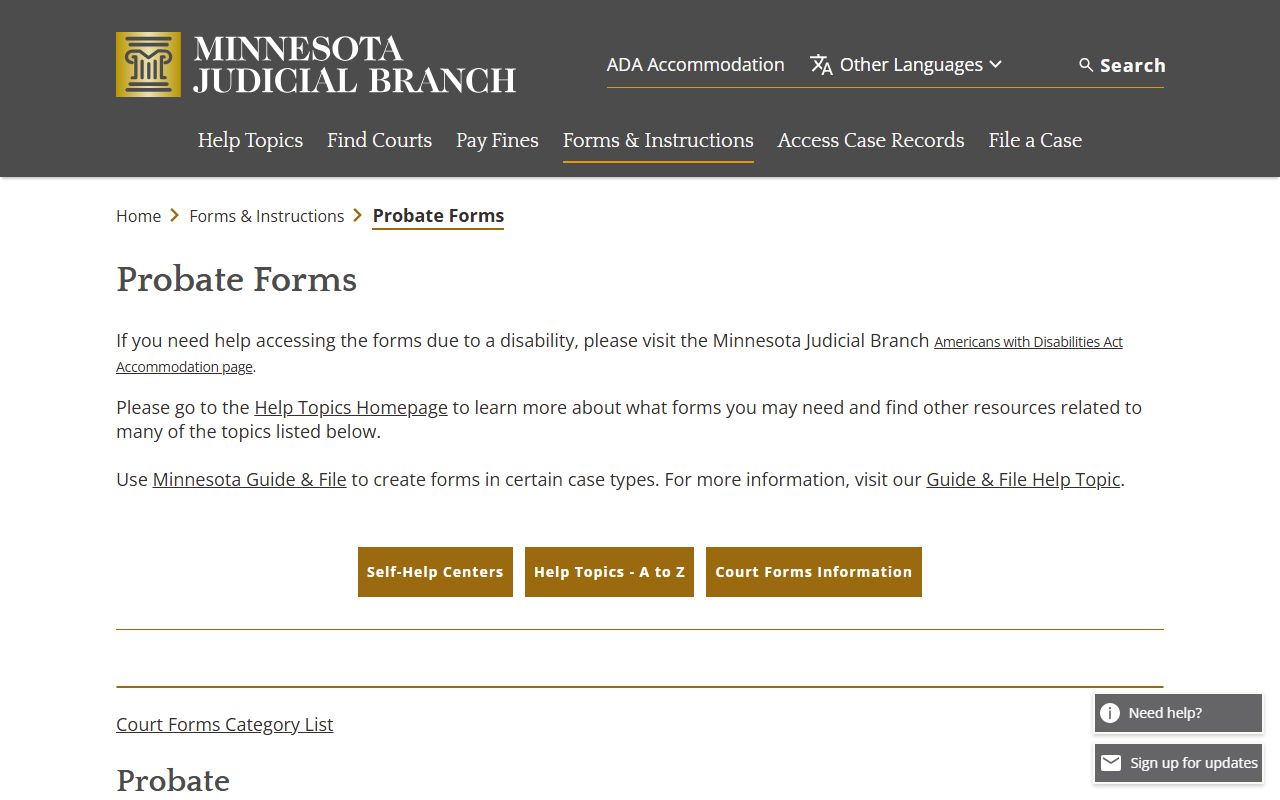
The forms page is important for Fillmore County probate users because the local filing is made in District Court with statewide Minnesota probate forms.
Fillmore County Probate Contact Card
Because probate is part of District Court, the local contact is Fillmore Court Administration. Use this office for probate copy questions, certified records, courthouse terminal access, and questions about how a public probate entry appears in MCRO. The research also notes that older or historical probate files may require Court Administration first and then a court archive or Minnesota Historical Society route if the local office directs it.
Probate Division of District Court
Fillmore County Courthouse
101 Fillmore Street E.
Preston, MN 55965
(507) 765-6021
Monday-Friday, 8:00 a.m.-4:30 p.m.
The Minnesota Attorney General probate handbook chapter explains the timing and county-of-residence filing concept used in probate cases.
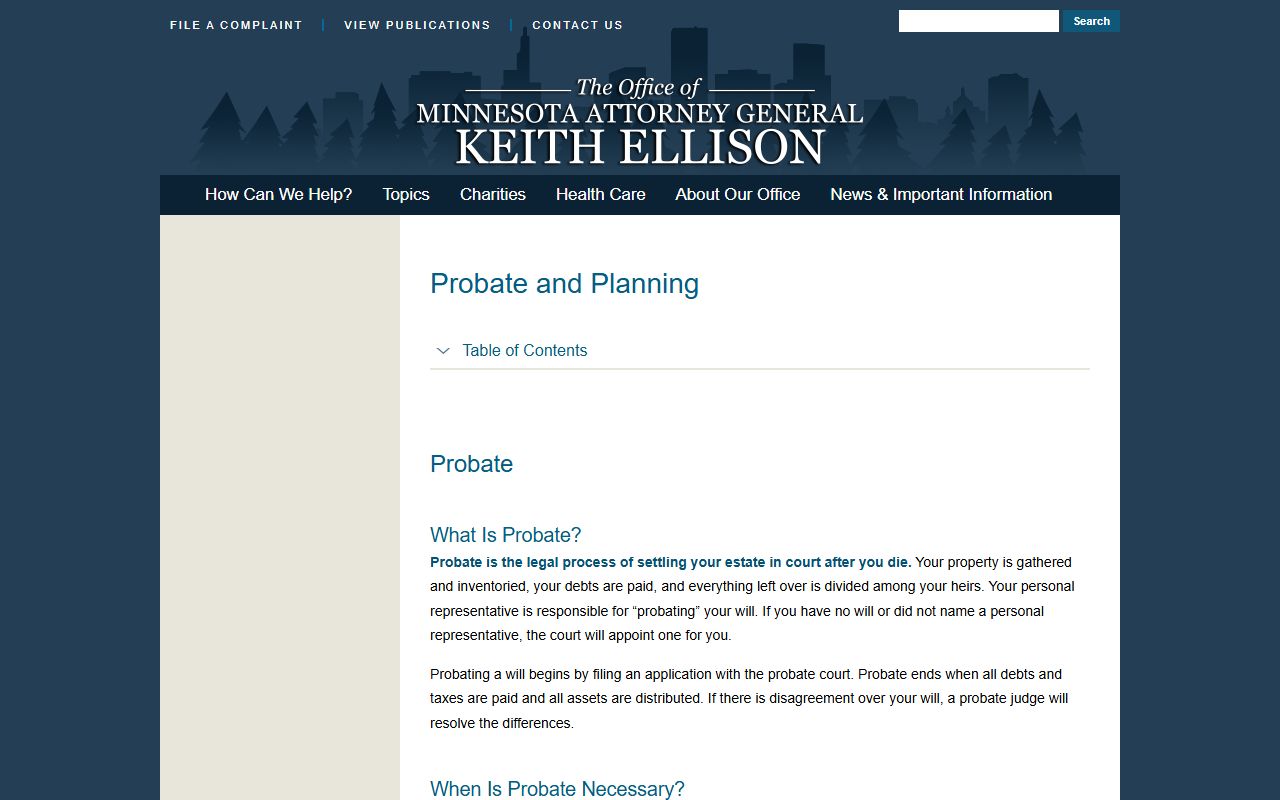
The handbook context helps explain why Fillmore County venue depends on the decedent's county of residence at death or another proper venue basis.
Fillmore County Probate Fees
The research did not locate a Fillmore-specific probate filing dollar amount. It directs users to the Minnesota district court fees page with the Fillmore county selector for current filing fees and copy fees. Copy charges that were documented in the research are listed below, but filing totals should be confirmed before mailing or presenting a payment.
| Item | Amount or source |
|---|---|
| Probate filing fee | Use the Minnesota district court fees page with the Fillmore county selector |
| Certified court copy of an instrument | $14 base fee shown in Minnesota district court fee examples, verify current local total |
| Exemplified and certified court copy | $28 base fee shown in Minnesota district court fee examples, verify current local total |
| Uncertified court copy | $0 base fee shown in district fee examples for some electronically filed records, verify with local court |
| Fee waiver | Minnesota district court fee information includes a fee waiver note |
What Fillmore County Probate Records Show
A public Fillmore County probate file can include the application or petition, will information if a will exists, appointment documents, notices, affidavits of mailing, inventory filings, final account material, and closing documents. The exact record set depends on whether the case is informal or formal, with-will or without-will, supervised or unsupervised, and whether later disputes or amendments were filed.
Probate forms identified in the research include packets for starting informal probate with a will and without a will, PRO701 instructions for informal probate without a will, PRO702 application for informal appointment of personal representative without a will, PRO801 instructions for informal probate with a will, PRO802 application for informal probate of will and appointment, formal probate packets, PRO1202 petition for formal probate of will and appointment, PRO912 inventory, PRO913 final account and proposal for distribution, and PRO914 unsupervised personal representative's statement to close estate.
The U.S. District Court for the District of Minnesota forms page is a federal forms source, not the Fillmore probate filing source.
This distinction matters because Fillmore County probate records are state District Court records, while federal forms relate to federal court matters.
Restricted Fillmore County Probate Records
Probate cases may be public unless sealed or restricted, but probate-related categories can contain sensitive medical, financial, and personal data. Guardianship and conservatorship files may include confidential material. MCRO's case categories combine Probate or Mental Health, and the research notes that public documents in civil commitment case types are not available through MCRO.
When a probate record does not appear online, that does not prove no case exists. Remote access limits, sealed filings, document-level restrictions, or older file storage can all affect what appears on a public screen. Court Administration is the correct local office for certified copies, courthouse terminal records, and records not remotely available.
The U.S. Bankruptcy Court for the District of Minnesota handles federal bankruptcy matters, not Fillmore County probate estate administration.
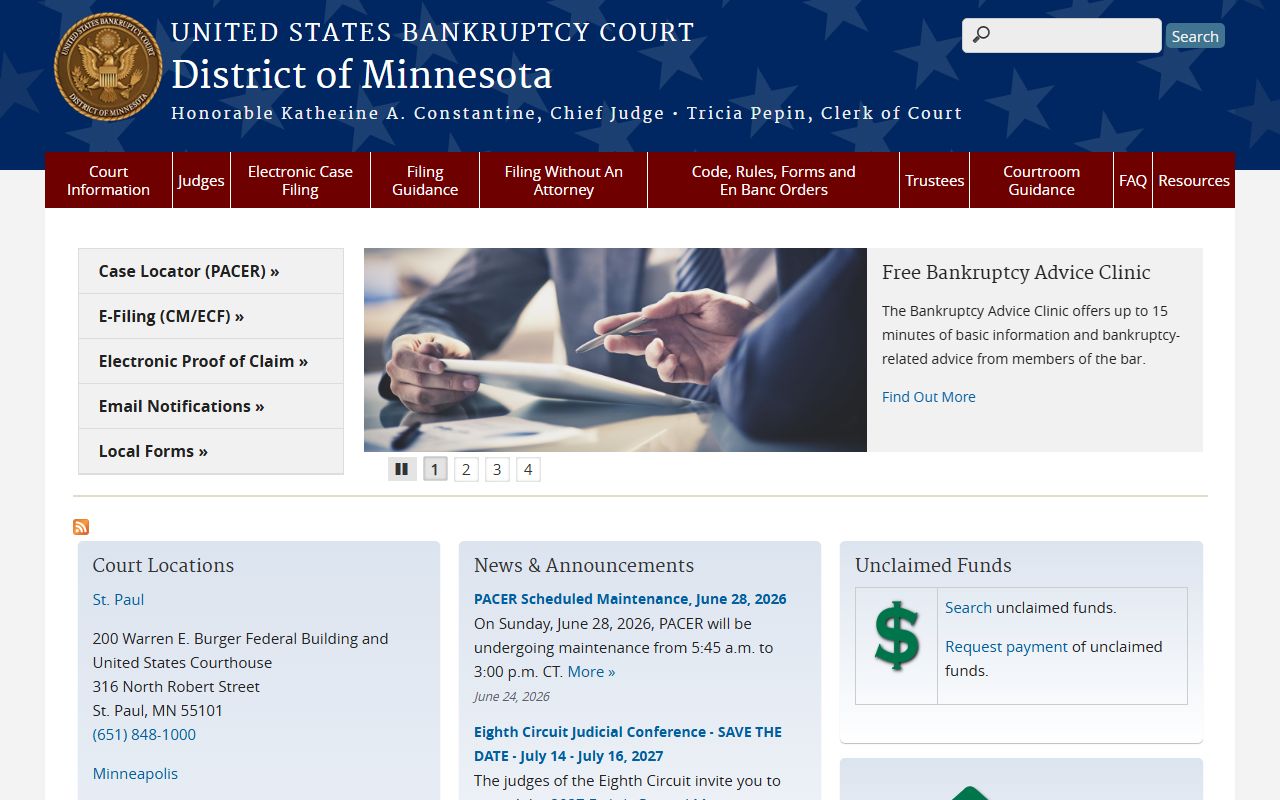
Bankruptcy can affect an estate or creditor question, but it is a separate federal court system from Fillmore County probate records.
The PACER federal case access system is the federal docket access route for cases in federal courts.
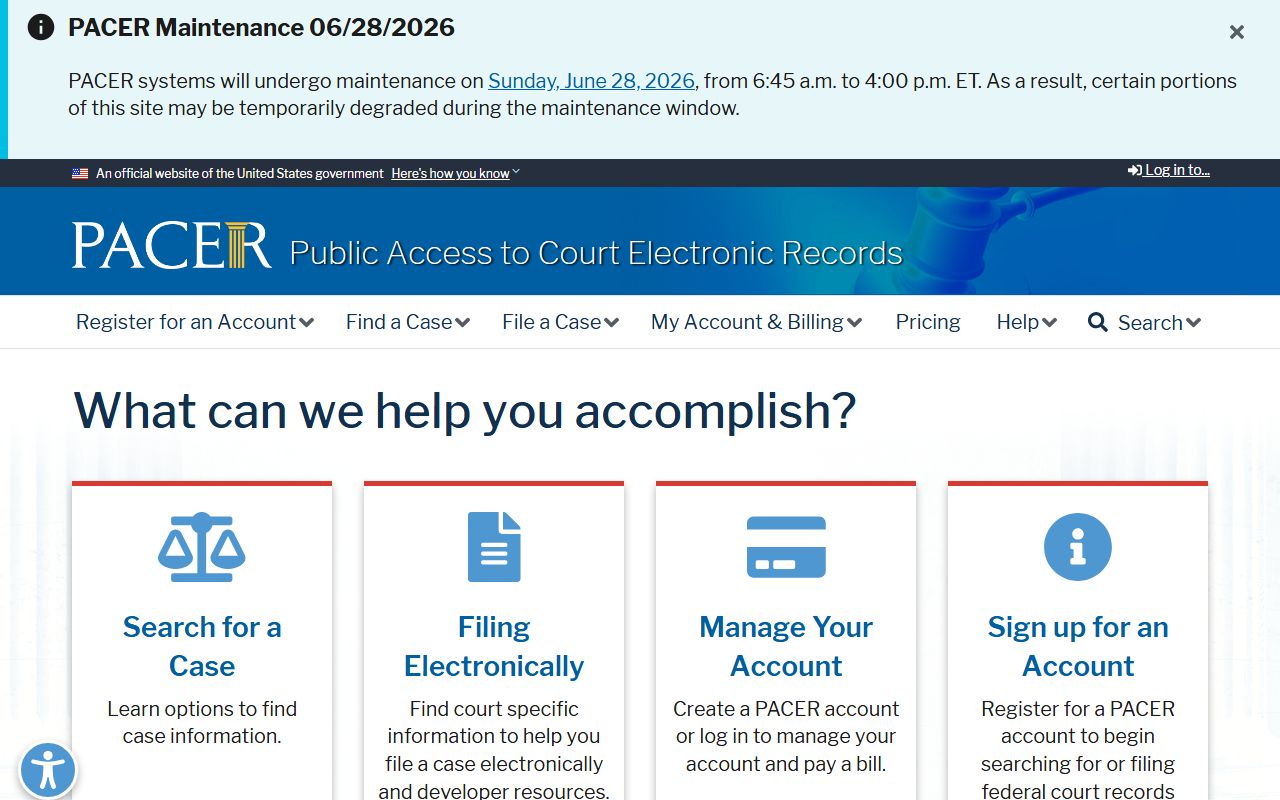
PACER is useful only if the research problem moves into federal court records; ordinary Fillmore County probate lookup stays with MCRO and Court Administration.