
Fillmore County Criminal Court Records
Criminal court records in Fillmore County are District Court case records. The Fillmore County District Court page states that the local court has original jurisdiction in criminal cases filed in the county. The case file begins once formal charges reach the court and then grows as hearings, motions, orders, pleas, trial events, disposition, and sentencing entries are added. It is the court record, not the booking log.
The Fillmore County Attorney prosecutes all felonies occurring in Fillmore County, most gross misdemeanor and misdemeanor cases outside municipalities, and all juvenile matters wherever they occur in the county. Once charges are filed, the case record is tracked in the court system. Details about the charge itself fit the Fillmore County arrest records and court charges pathway, while the full case file remains the criminal court record.
The Minnesota Judicial Branch criminal expungement FAQ is one of the official sources assigned to Fillmore County criminal court records.
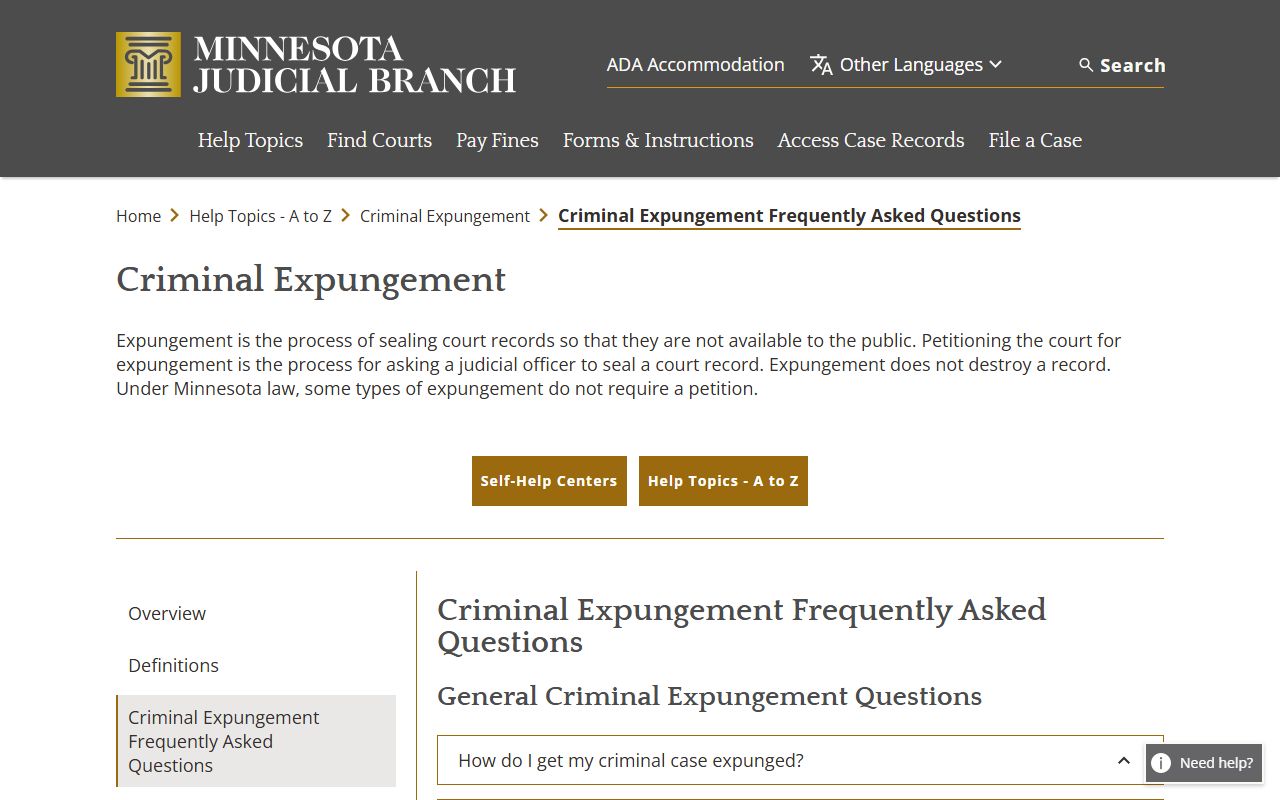
Expungement guidance matters because a public criminal case file can later become sealed or partly restricted by court order or statute.
Search Fillmore County Criminal Cases
Use MCRO Case Search for public District Court criminal case records. Select the Criminal case category and use the Fillmore county filter when the search should be local. Case-number searches are more reliable than defendant-name searches for some pending matters because MCRO warns that pending criminal, traffic, and petty misdemeanor cases without conviction will not return in name-search case results or hearing results when searching by defendant name.
- Open MCRO Case Search and choose Name, Case Number, Citation Number, or Attorney.
- Select Criminal as the case category and Fillmore as the county location when narrowing results.
- Use case number search when a pending matter does not appear by defendant name.
- Open the case to review the Register of Actions, hearing entries, charge data, and public documents.
- Request certified criminal case copies from Fillmore Court Administration when needed for legal use.
For background-check style criminal history, use the Minnesota BCA Public Criminal History Search. The research identifies BCA CHS as the better channel for public criminal-history searches because it is tied to fingerprint-based state criminal-history data. MCRO itself is a court-record lookup tool, not a fingerprint-based criminal-history repository.
The BCA Public Criminal History Search home page is assigned to the Fillmore County criminal records workflow.
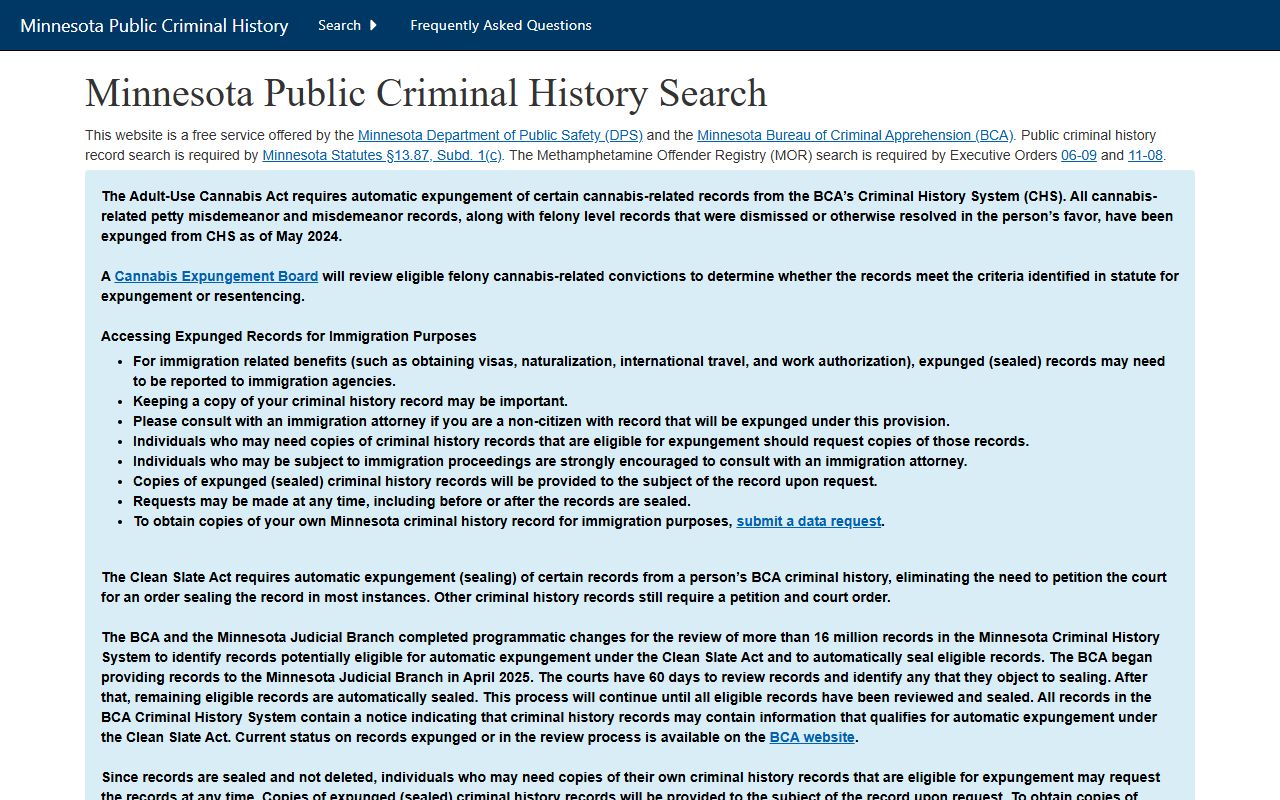
BCA search and MCRO answer different questions: one is state criminal-history data, and the other is the court case file.
Fillmore Criminal Case Flow
A criminal case file changes as the case moves. The first public court entries may show the complaint, first appearance, bail or bond conditions, and future hearings. Later entries may show motions, plea negotiations, trial settings, verdict, disposition, sentence, probation, restitution, fines, or discharge. One criminal court record can show charges that were amended, dismissed, or resolved at different severity levels.
Case flow: Charges Filed › Arraignment or First Appearance › Pretrial and Motions › Plea or Trial › Disposition › Sentencing
Charges filed means the prosecutor has placed formal allegations into the court record. Arraignment or first appearance addresses rights, release terms, bail, and future dates. Pretrial entries can show motions, orders, continuances, and settlement work. Plea or trial entries show how guilt is resolved. Disposition and sentencing entries record the final outcome, sentence, probation, fines, restitution, and conditions when public.
Fillmore Criminal Court Record Fields
A Fillmore criminal case file is read through the case number, caption, Register of Actions, public documents, hearing list, charge records, and disposition data. MCRO warns that a case type listed in search results is not necessarily the final outcome. A case can start as a felony and end at a lower sentence level, or one charge can resolve while another is dismissed.
| Field | What It Shows |
|---|---|
| Case Number | Fillmore criminal examples use formats such as 23-CR-25-449. |
| Defendant | The person charged in the criminal case, with protected personal data withheld or redacted. |
| Charges | Filed allegations, statute references, offense level, and amendments when public. |
| Register of Actions | Chronological entries for complaint, hearings, motions, orders, plea, sentence, and review dates. |
| Bail or Bond | Release terms, bail amount, bond notes, or no-bond status if public. |
| Plea | The defendant's formal answer, such as guilty or not guilty, when entered. |
| Disposition | The outcome of each case or charge, such as conviction, dismissal, acquittal, or other closure. |
| Sentence | Custody, probation, fines, restitution, conditions, or discharge entries when public. |
The BCA criminal history search form is useful when the question is broader than one Fillmore court case.
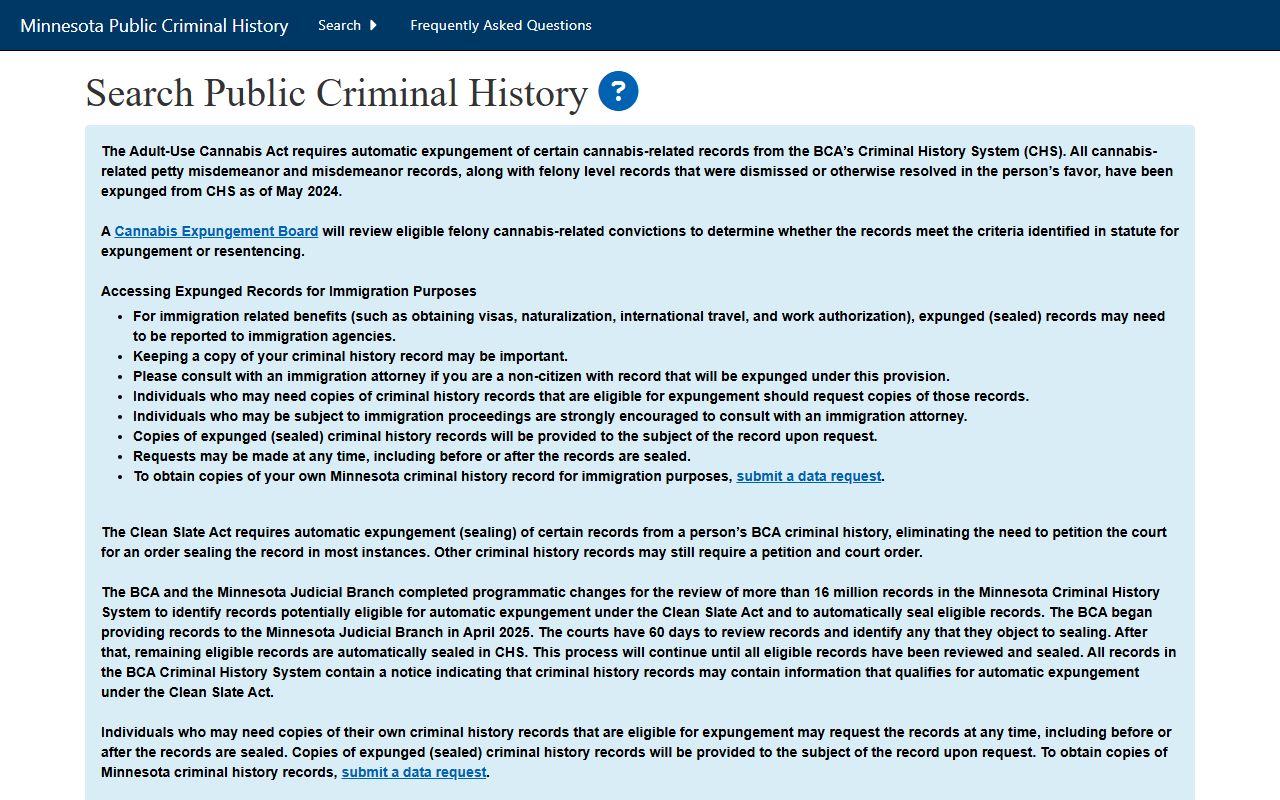
The BCA form should not be treated as a substitute for certified court copies, but it can help with statewide criminal-history lookup.
Fillmore Charges vs Convictions
A charge is an allegation filed in court. A conviction is a final guilt result by plea or finding. Fillmore County criminal court records can show both, and they can show that a charge was amended, reduced, dismissed, or resolved differently than the original filing. That is why the final disposition and sentence must be read separately from the first charge list.
| Point | Charge | Conviction |
|---|---|---|
| Meaning | An accusation filed with the court. | A guilty plea, guilty finding, or conviction entered as judgment. |
| Timing | Early in the case after prosecutor review. | At disposition or sentencing. |
| Proof Level | Based on probable cause and charging review. | Requires plea or proof beyond a reasonable doubt. |
| Record Reading | May change before the case ends. | Must be checked charge by charge. |
Fillmore County Criminal Prosecution
The Fillmore County Attorney is Brett Corson. The office prosecutes all felonies occurring in Fillmore County, most gross misdemeanor and misdemeanor cases occurring outside municipalities, and all juvenile matters wherever they occur in the county. The attorney page lists the office at 101 Fillmore St., P.O. Box 466, Preston, with regular weekday hours and the local prosecutor phone line.
The prosecutor role explains why a criminal court record may not match the arrest entry. Law enforcement may arrest or refer a case, but formal criminal court charges depend on prosecutor review and filing. Public defender questions are routed through court administration, and the Fillmore referrals page lists the Third Judicial District Public Defender Rochester Office for court-appointed representation in criminal and juvenile delinquency cases.
The Fillmore County Attorney page is an assigned source for criminal court record context.
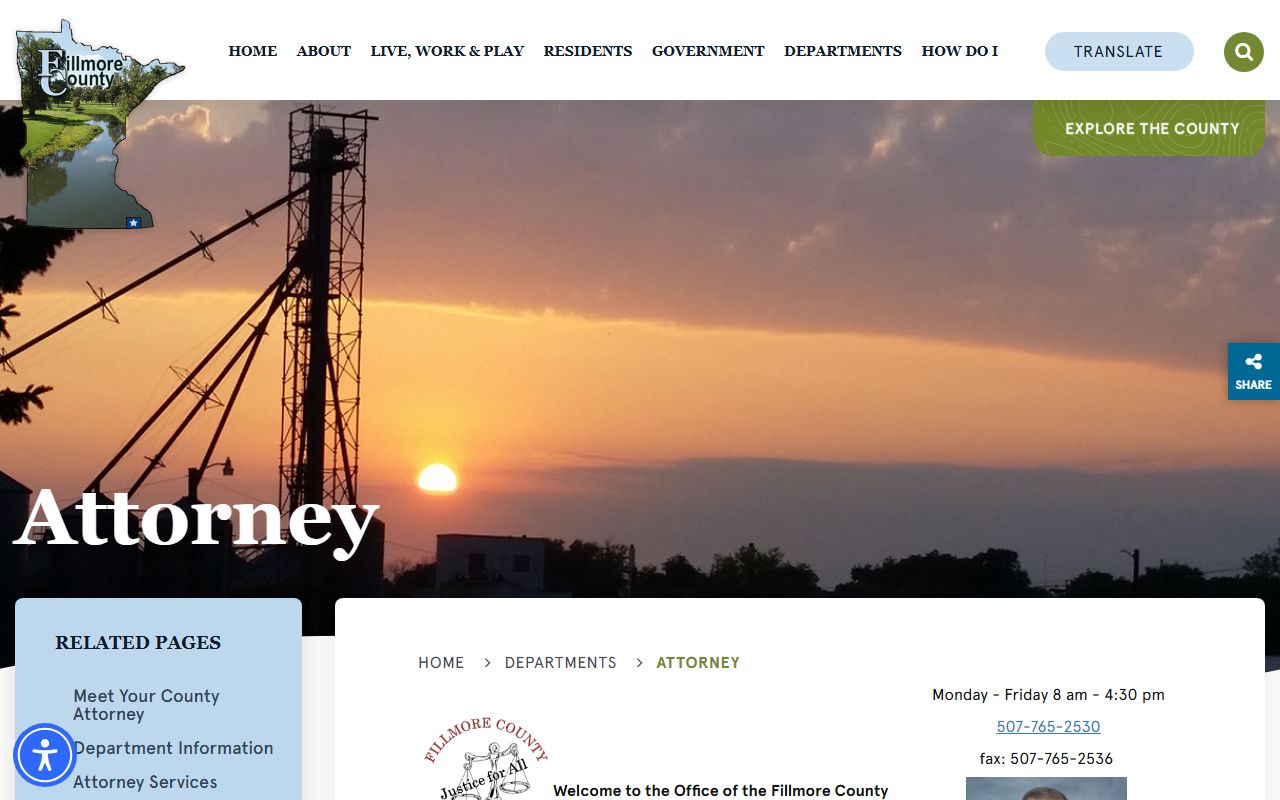
That office context helps separate police booking data, prosecutor-filed charges, and the court case file.
The County Attorney services page gives additional local prosecution context.
Those services connect the local criminal case process to prosecution, juvenile matters, and court-related public safety work.
Sealed and Expunged Criminal Records
Restricted criminal court records include juvenile matters, sealed cases, expunged cases, and certain data withheld under court rules or statute. Minnesota expungement under Minn. Stat. chapter 609A may seal qualifying court records from public view. Judicial Branch guidance states that eligibility does not guarantee relief because a judicial officer decides whether to grant full or partial expungement unless automatic relief applies.
| Point | Sealed | Expunged |
|---|---|---|
| Public View | Hidden from routine public access. | Sealed from public view through the expungement process or qualifying automatic relief. |
| Authority | Court order, statute, or court access rule. | Minnesota expungement law and court order where required. |
| Agency Reach | May vary by order and system. | May affect court records and, depending on the order, executive-branch records. |
| Proof | Certified order may be needed. | Certified expungement order should be kept for future disputes. |
Note: A case disappearing from one public search does not prove every agency record changed at the same time.
Public Access to Fillmore Criminal Records
Public access to Fillmore criminal court records is governed by the Minnesota Rules of Public Access to Records of the Judicial Branch and Minnesota data statutes. Rule 4 defines accessibility and exceptions for court records, while Rule 8 controls inspection, copying, and remote access. Minn. Stat. section 13.87 governs public criminal-history data and supports the BCA public criminal history system.
The BCA criminal history FAQ explains repository coverage for public criminal history.
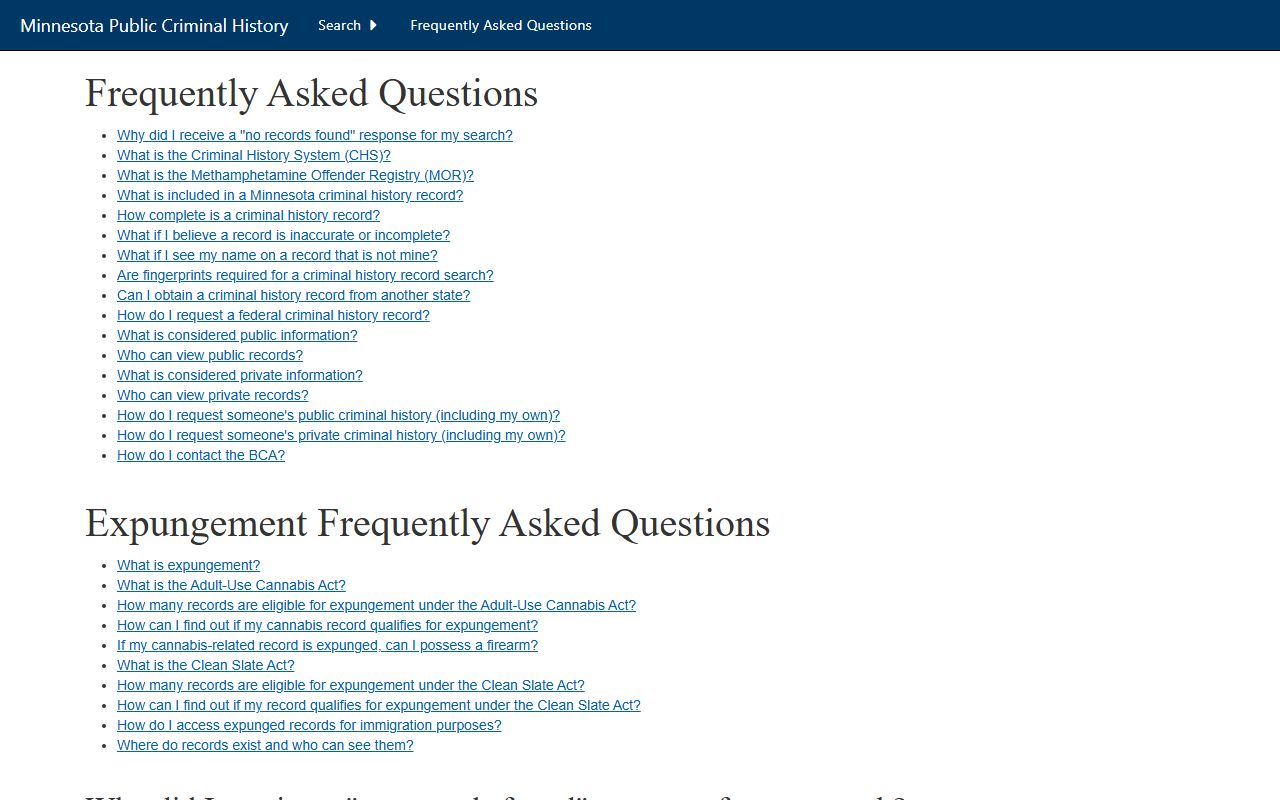
The FAQ reinforces the practical split between a court case file in MCRO and the state's criminal-history repository.
Restricted Fillmore Criminal Court Records
Juvenile delinquency records, child-protection records, sealed records, expunged records, adoption records, and some protected personal data are not routine public search material. MCRO also states that Domestic Abuse/OFP and harassment restraining order case types are not available through MCRO due to federal VAWA restrictions. Pending criminal cases without conviction may not appear by defendant name even when a case-number search can locate public data.
For a complete public file or a certified copy, contact Fillmore County Court Administration. For a background-history search, use BCA CHS. For sheriff reports or booking-related law-enforcement data, use the sheriff records request route documented on the Fillmore County Sheriff's Office services page. The agency that owns the record controls the correct access path.